குறிப்பு - இதன் தமிழாக்கம் இந்த பக்கத்தில் சற்று கீழே உள்ளது.
Join our WhatsApp group here -> https://chat.whatsapp.com/DtRfcPrnZykIfmavZU6kj0
VV-021: Compost — Let's Look at Its Numbers!
"Is your soil hardened? Spread manure. Are your crops yellow? Apply compost." — This is the common advice we always hear in natural farming. We think of compost as a magic medicine that solves all problems.
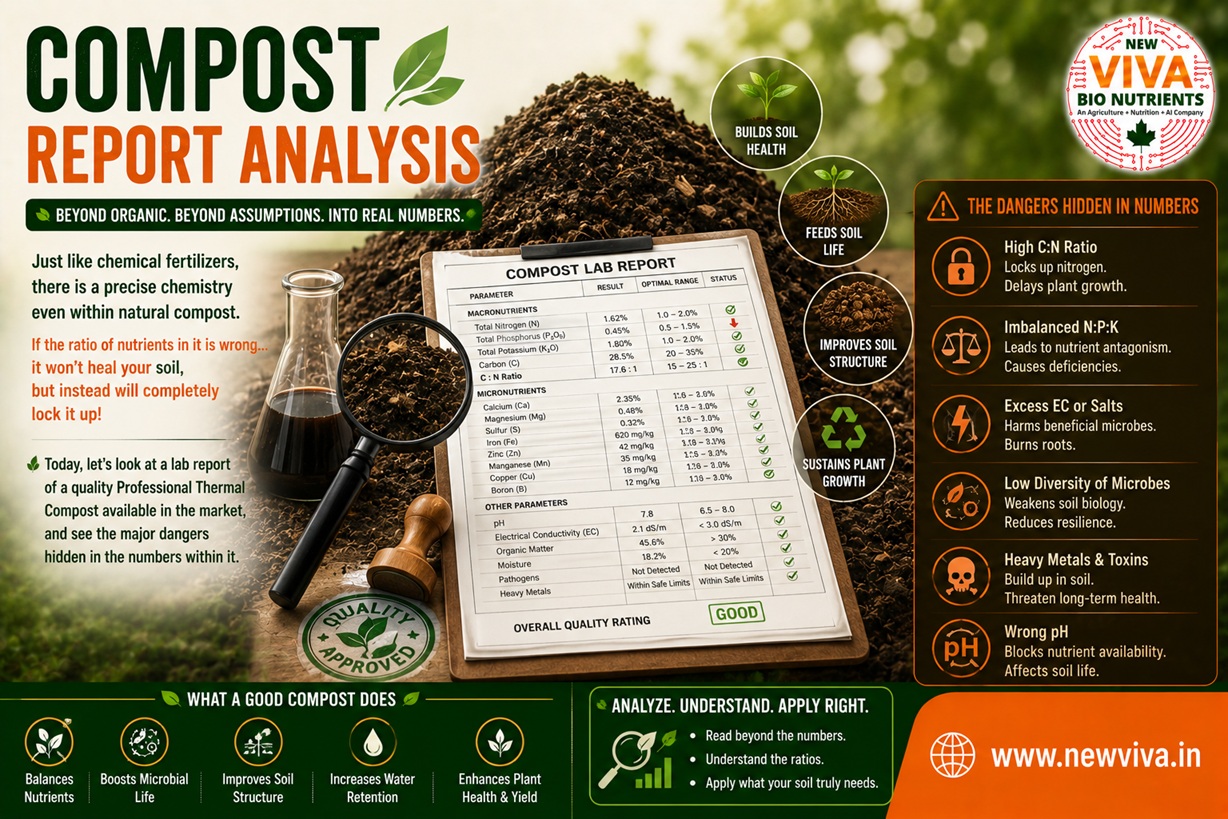
But, just like chemical fertilizers, there is a precise chemistry even within natural compost. If the ratio of nutrients in it is wrong... it won't heal your soil, but instead will completely lock it up! Today, let's look at a lab report of a quality Professional Thermal Compost available in the market, and see the major dangers hidden in the numbers within it.
Raw Laboratory Data
Before calculating the ratios, let's look at the precise measurements on the lab sheet:
Organic Carbon: 33.99%
Total Nitrogen (N): 0.47%
Total Phosphorus (P): 0.17%
Total Potassium (K): 0.23%
Calcium (Ca): 0.24%
Magnesium (Mg): 0.24%
Sodium (Na): 0.07%
Sulfur (S): 120 mg/kg
Iron (Fe): 713.2 mg/kg
Manganese (Mn): 29.63 mg/kg
Zinc (Zn): 5.79 mg/kg
Copper (Cu): 2.255 mg/kg
Boron (B): 2.20 mg/kg
Heavy Metals (As, Hg, Pb, Cd, Cr, Ni): All are within safe, very low limits.
Danger 1: The 72:1 C:N Trap That Steals Nitrogen!
Using these direct lab values, the first thing we calculate is the Carbon-Nitrogen (C:N) ratio (33.99% Carbon ÷ 0.47% Nitrogen).
C:N Ratio = 72.3:1
A standard, well-decomposed compost should have a proper C:N ratio of only 15:1 to 25:1.
What does the calculated 72:1 ratio indicate? It means this compost is still raw carbon waste that hasn't fully decomposed. If you apply this directly to your soil... the microorganisms in the soil will be hungry for nitrogen to decompose this excess carbon. Then, they will completely capture and lock up the nitrogen (Nitrate & Ammonium) present in your crop's root zone. Because of this, in the very first season itself, crops will face severe nitrogen deficiency, leaves will turn yellow, and growth will completely stall.
Danger 2: Dominance of Magnesium and Potassium!
According to the Albrecht-Kinsey formula, we must first convert these percentages into milligrams/kilogram (mg/kg or ppm), and then using their atomic weight and valence, convert them into milli-equivalents (meq/100g) to calculate the Base Saturation.
From the total Cation Exchange Capacity of 409.4 meq/100g, here are the calculated actual percentages:
Calcium level: Direct 0.24% → 2,400 ppm → 120.0 meq → 29.3% (Required for soil: 60-70%) ❌ Extremely low
Magnesium level: Direct 0.24% → 2,400 ppm → 200.0 meq → 48.9% (Required for soil: 10-20%) ❌ Magnesium's excessive dominance
Potassium level: Direct 0.23% → 2,300 ppm → 58.97 meq → 14.4% (Required for soil: 3-5%) ❌ Excessively high
Sodium (salt) level: Direct 0.07% → 700 ppm → 30.43 meq → 7.4% (Required for soil: 0.5-1.5%) ❌ Salinity hazard
Look at the calculated Ca:Mg ratio — 120 ÷ 200 = 0.6:1. In a healthy system, calcium should be 6 times higher than magnesium. But here, since magnesium occupies 48.9%, applying this fertilizer directly will make your soil harden like a cement floor, causing roots to suffocate and rot.
Not only that, the excess potassium (14.4%) and sodium (7.4%) will create an osmotic pressure that prevents roots from absorbing water, causing the edges of leaves to burn.
Danger 3: Antagonism Between Nutrients (N:S & Fe:Mn)
Calculated N:S ratio (4,700 ppm ÷ 120 ppm) = 39.2:1 (Should be: 10-15:1): This compost has almost no sulfur. Without sulfur, crops cannot convert nitrogen into proteins; the crop will grow weakly.
Calculated Fe:Mn ratio (713.2 ppm ÷ 29.63 ppm) = 24.1:1 (Should be: 1.5-2.5:1): Iron is excessively high here. This will completely lock up the manganese in the soil, preventing the crop from absorbing it, causing manganese deficiency.
Blueprint: How to Fix 1 Ton of Compost?
One good thing is... this compost does not have any toxic heavy metals to a quantifiable level; it's very clean. However, the nutrients are not balanced. This should not be applied directly to the soil. We must definitely amend it before application.
What we need to mix to fix the compost:
-
Nitrogen - We need to add more green leafy materials to this. Only after bringing the C:N ratio to 20-25:1 should it be applied to the soil.
-
Sulfur - This is very low. Sulfur is very essential for the amino acids produced in a plant to convert into protein. Otherwise, it will pave the way for pest attacks. Only after bringing the N:S ratio to 10:1 should it be applied to the soil.
-
Gypsum (Calcium Sulfate): This will provide only calcium without adding magnesium. Because of this, the dominance of magnesium will reduce (48.9%), and cell walls will become stronger.
Additionally, this compost also has a manganese deficiency. This can cause problems like flower drop. In today's natural farming methods, there is no clear practice for this. In regenerative agriculture, there is a possibility to use Manganese Sulfate, chelate it so the crop can absorb it, and apply it through spray.
⚠️ Let me also give you a warning here — excess potassium is a slow poison for your soil!
In the lab report — potassium is 14.4%. But the soil needs only 3-5%. This is not a blessing; it's a mischief that will spoil your soil over time!
What happens if you ignore this?
- Potassium won't go away – It won't dissolve and wash out like nitrogen. It will stick tightly to the soil and stay there for years.
- Soil will turn into stone – Excess potassium breaks down soil aggregates, making the soil tight and compacted. Roots won't get air.
- It blocks calcium and magnesium – Potassium occupies the space in the roots and won't let calcium and magnesium in. No matter how much you apply, the crop won't get it.
- Fixing it is very difficult – To bring it to safe levels, you have to pour in calcium and magnesium for many seasons.
This excess potassium in our compost is a big problem. This is also a major reason for our weed problem. So before applying it to the soil, think carefully and act. Test your soil every year. If potassium is already high in your soil — stop applying compost and manure. Otherwise, you will become a permanent customer for the herbicide company.
What We Must Understand:
Don't buy natural inputs with your eyes closed. Just because it looks black and resembles soil doesn't mean it's good for your valuable crops. Ask for the lab report, look at the numbers, balance the chemistry. Then see how your farm transforms into an incredible High Brix fortress!
Let's talk more.
Tamil Version (தமிழ் வடிவம்)
VV-021: கம்போஸ்ட் — அதன் கணக்குகளை பார்ப்போம்!
"உங்க நிலம் இறுகிப் போயிருக்கா? எருவை அள்ளிப்போடு. பயிர் மஞ்சளா இருக்கா? கம்போஸ்ட்டைக் கொட்டு." — இயற்கை விவசாயத்துல நாம எப்பவும் கேக்குற பொதுவான அட்வைஸ் இதுதான். கம்போஸ்ட்ன்றதை எல்லாப் பிரச்சனையையும் தீர்க்குற ஒரு மேஜிக் மருந்து மாதிரி நாம நினைச்சிட்டு இருக்கோம்.
ஆனா, ரசாயன உரங்களை மாதிரியே இயற்கை கம்போஸ்ட்டுக்குள்ளயும் ஒரு துல்லியமான கெமிஸ்ட்ரி இருக்கு. அதுல சத்துக்களோட விகிதம் தப்பா இருந்தா... அது உங்க நிலத்தைக் குணப்படுத்தாது, மாறாக மொத்தமா லாக் பண்ணிடும்! இன்னைக்கு, சந்தையில கிடைக்கிற ஒரு தரமான புரொபஷனல் தெர்மல் கம்போஸ்ட் (Professional Thermal Compost) லேப் ரிப்போர்ட்டை வச்சு, அதுக்குள்ள எண்கள் வடிவில் ஒளிஞ்சிருக்கற பேராபத்துகளை பார்க்கப்போறோம்.
ஆய்வகத்தின் நேரடி முடிவுகள் (Raw Laboratory Data)
விகிதங்களை கணக்கிடுவதற்கு முன், லேப் சீட்டில் இருக்கும் துல்லியமான அளவுகளைப் பார்ப்போம்:
கரிமக் கார்பன் (Organic Carbon): 33.99%
மொத்த நைட்ரஜன் (N): 0.47%
மொத்த பாஸ்பரஸ் (P): 0.17%
மொத்த பொட்டாசியம் (K): 0.23%
கால்சியம் (Ca): 0.24%
மெக்னீசியம் (Mg): 0.24%
சோடியம் (Na): 0.07%
சல்பர் / கந்தகம் (S): 120 mg/kg
இரும்புச்சத்து (Fe): 713.2 mg/kg
மாங்கனீசு (Mn): 29.63 mg/kg
ஜிங்க் / துத்தநாகம் (Zn): 5.79 mg/kg
செம்பு / காப்பர் (Cu): 2.255 mg/kg
போரான் (B): 2.20 mg/kg
கன உலோகங்கள் (As, Hg, Pb, Cd, Cr, Ni): அனைத்தும் பாதுகாப்பான, மிகக் குறைந்த எல்லையிலேயே உள்ளன.
ஆபத்து 1: நைட்ரஜனைத் திருடும் 72:1 C:N பொறி!
இந்த நேரடி லேப் மதிப்புகளைக் கொண்டு நாம் முதலில் கணக்கிடுவது கார்பன்-நைட்ரஜன் (C:N) விகிதம் ஆகும் (33.99% கார்பன் ÷ 0.47% நைட்ரஜன்).
C:N விகிதம் = 72.3:1
ஒரு தரமான, நல்லா மட்கிய கம்போஸ்ட்டோட சரியான C:N விகிதம் 15:1 முதல் 25:1 வரை மட்டும்தான் இருக்கணும்.
கணக்கிடப்பட்ட 72:1 என்ற விகிதம் எதைக் காட்டுதுனா, இந்த கம்போஸ்ட் இன்னும் முழுசா மட்காத பச்சை கார்பன் குப்பை. இதை அப்படியே நீங்க நிலத்துல போட்டீங்கன்னா... மண்ணுல இருக்குற நுண்ணுயிர்கள் இந்த அதிகப்படியான கார்பனை மக்க வைக்கிறதுக்காக நைட்ரஜன் சத்து வேண்டி பசியோடு அலையும். அப்போ அதுங்க உங்க பயிரோட வேர்ச் சூழல்ல இருக்குற நைட்ரஜனை (Nitrate & Ammonium) மொத்தமா புடிச்சு திருடி லாக் பண்ணிடும். இதனால முதல் சீசன்லயே பயிர்களுக்கு கடுமையான நைட்ரஜன் பற்றாக்குறை வந்து, இலைங்க மஞ்சளாகி வளர்ச்சி முடங்கிடும்.
ஆபத்து 2: மெக்னீசியம் மற்றும் பொட்டாசியத்தின் ஆதிக்கம்!
ஆல்பிரெக்ட்-கின்சி விதிப்படி, இந்த சதவீதங்களை நாம் முதலில் மில்லிகிராம்/கிலோகிராமாக (mg/kg அல்லது ppm) மாற்றி, பின் அவற்றின் அணு எடை மற்றும் இணைதிறன் கொண்டு மில்லி-இக்விவலன்ட்டாக (meq/100g) மாற்றி மண் சமிப்புத் திறனை (Base Saturation) கணக்கிட வேண்டும்.
மொத்தமுள்ள 409.4 meq/100g என்ற சமிப்புத் திறன் எல்லையில் இருந்து கணக்கிடப்பட்ட உண்மை சதவீதம் இதோ:
கால்சியம் அளவு: நேரடி 0.24% → 2,400 ppm → 120.0 meq → 29.3% (மண்ணுக்குத் தேவை: 60-70%) ❌ மிக மிகக் குறைவு
Magnesium அளவு: நேரடி 0.24% → 2,400 ppm → 200.0 meq → 48.9% (மண்ணுக்குத் தேவை: 10-20%) ❌ மெக்னீசியத்தின் பேராதிக்கம்
பொட்டாசியம் அளவு: நேரடி 0.23% → 2,300 ppm → 58.97 meq → 14.4% (மண்ணுக்குத் தேவை: 3-5%) ❌ அளவுக்கு அதிகம்
சோடியம் (உப்பு) அளவு: நேரடி 0.07% → 700 ppm → 30.43 meq → 7.4% (மண்ணுக்குத் தேவை: 0.5-1.5%) ❌ உவர்ப்பு ஆபத்து
இதோட கணக்கிடப்பட்ட Ca:Mg விகிதத்தைப் பாருங்க —120 ÷ 200 = 0.6:1 தான் இருக்கு. ஆரோக்கியமான சிஸ்டத்துல மெக்னீசியத்தை விட கால்சியம் 6 மடங்கு அதிகமா இருக்கணும். ஆனா இங்க மெக்னீசியம் 48.9% ஆக்கிரமிச்சிருக்கறதால, இந்த உரத்தை அப்படியே போட்டா உங்க மண் சிமெண்ட் தரை மாதிரி இறுகி, வேர்கள் மூச்சுத்திணறி அழுகிப்போயிடும்.
அதுமட்டுமில்லாம, அதிகப்படியான பொட்டாசியமும் (14.4%), சோடியமும் (7.4%) வேர்கள் தண்ணீரை உறிஞ்ச முடியாத ஒரு ஆஸ்மோடிக் அழுத்தத்தை உண்டாக்கி, இலையின் ஓரங்களை கருக வைக்கும்.
ஆபத்து 3: சத்துக்களின் பரஸ்பர பகை (N:S & Fe:Mn)
கணக்கிடப்பட்ட N:S விகிதம் (4,700 ppm ÷ 120 ppm) = 39.2:1 ஆக உள்ளது (இருக்க வேண்டியது: 10-15:1): இந்த கம்போஸ்ட்ல சல்பர் சத்தே இல்லை. சல்பர் இல்லாம பயிரால நைட்ரஜனைச் செரிச்சு புரோட்டீனா மாத்த முடியாது; பயிர் பலவீனமாகவே வளரும்.
கணக்கிடப்பட்ட Fe:Mn விகிதம் (713.2 ppm ÷ 29.63 ppm) = 24.1:1 ஆக உள்ளது (இருக்க வேண்டியது: 1.5-2.5:1): இரும்புச்சத்து இங்க மொரட்டுத்தனமா அதிகமா இருக்கு. இது மண்ணுல இருக்குற மாங்கனீசு சத்தை பயிர் எடுக்க விடாம மொத்தமா லாக் செஞ்சு, மாங்கனீசு குறைபாட்டை உண்டாக்கும்.
ப்ளூபிரிண்ட்: 1 டன் கம்போஸ்ட்டை எப்படிச் சரி செய்வது?
ஒரு நல்ல விஷயம் என்னன்னா... இந்த கம்போஸ்ட்ல எந்த விதமான ஒரு நச்சு கன உலோகங்களும் குறிப்பிடும் அளவுக்கு இல்லை; ஆனா, சத்துக்கள் பேலன்ஸ் இல்லை. இதை நேரடியாக நிலத்தில் போடவே கூடாது. போடுவதற்கு முன்னாடி இதை நாம் கண்டிப்பா சீரமைக்கணும்.
கம்போஸ்ட்டைச் சரி செய்ய நாம் கலக்க வேண்டியவை:
-
நைட்ரஜன் - இதில் பசுந்தாள் பச்சை இலைகளை அதிகமாக சேர்க்க வேண்டும். CN ratio-வை, 20-25:1 என்ற அளவுக்கு கொண்டு வந்த பிறகே மண்ணில் இட வேண்டும்.
-
சல்ஃபர் - இது மிகவும் குறைவாக உள்ளது. ஒரு தாவரத்தில் தயாரிக்கப் பட்ட அமினோ அமிலங்கள் புரதமாக மாற, சல்ஃபர் மிக அவசியம். இல்லையென்றால், அது பூச்சி தாக்குதலுக்கே வழி வகுக்கும். NS ratio - 10:1 என்ற அளவுக்கு கொண்டு வந்த பிறகே மண்ணில் இட வேண்டும்.
-
ஜிப்சம் (கால்சியம் சல்பேட்): இது மெக்னீசியத்தை ஏத்தாம கால்சியத்தை மட்டும் அள்ளிக்குடுக்கும். இதனால மெக்னீசியத்தோட ஆதிக்கம் குறைஞ்சு (48.9%), இலைச் சுவர்கள் பலமாகும்.
அதோடு இந்த கம்போஸ்ட்ல மாங்கனீசு பற்றாக்குறையும் இருக்கு. இது பூ உதிர்தல் போன்ற பிரச்சனைகளை உருவாக்கலாம். இன்று நாம் செய்யும் இயற்கை விவசாய முறையில இதுக்கு தெளிவான நடைமுறை இல்ல. மீளுருவாக்க விவசாயத்துல இதை மாங்கனீசு சல்ஃபேட் யூஸ் பண்ணி, பயிர் எடுத்துக்குற வகையில "கீலேட்" செஞ்சு ஸ்ப்ரே மூலம் கொடுக்கும் சாத்தியக்கூறு இருக்கு.
⚠️ இங்க ஒரு எச்சரிக்கையும் கொடுக்கிறேன்- அதிகமான பொட்டாசியம் உங்க மண்ணுக்கு மெதுவான விஷம்!
லேப் ரிப்போர்ட்ல — பொட்டாசியம் 14.4% இருக்கு. ஆனா மண்ணுக்குத் தேவை 3-5% தான். இது ஒரு வரம் இல்லை; இது உங்க மண்ணை நாளடைவில் கெடுத்திடும் ஒரு கெடுவேலை!
இதை கவனிக்காமல் விட்டா என்ன ஆகும்?
- பொட்டாசியம் போகாது – நைட்ரஜன் மாதிரி அது கரைஞ்சு போயிடாது. மண்ணில புடுச்ச ஒட்டிக்கும், வருஷக்கணக்கா அங்கயே கிடக்கும்.
- மண் கல்லாகிடும் – அதிக பொட்டாசியம் மண் கட்டிகளை உடைச்சி, மண்ணை இறுக்கமாக்கி கெட்டிப்படுத்திடும். வேருக்கு மூச்சு கிடைக்காது.
- கால்சியம், மெக்னீசியத்தை தடுக்கும் – பொட்டாசியம் வேர்ல இடத்தை பிடிச்சுக்கிட்டு, கால்சியத்தையும் மெக்னீசியத்தையும் உள்ள விடாது. நீங்க எவ்வளவு போட்டாலும், பயிருக்கு எட்டாது.
- சரி பண்ண ரொம்ப கஷ்டம் – பாதுகாப்பான அளவுக்கு கொண்டுவர, பல சீசன்களுக்கு கால்சியமும் மெக்னீசியமும் அள்ளிப் போட வேண்டும்.
நம்ம கம்போஸ்ட்-ல அதிகப்படியான பொட்டாசியம் அப்படின்றது பெரிய பிரச்சனை. நம்ம களை பிரச்சனைக்கும் இது ஒரு பெரும் காரணம். அதனால மண்ணுல போடறதுக்கு முன்னாடி கொஞ்சம் யோசிச்சு பண்ணுங்க. ஒவ்வொரு வருஷமும் மண்ண பரிசோதனை பண்ணுங்க. உங்க மண்ணுல ஏற்கனவே பொட்டாசியம் ஜாஸ்தியா இருந்ததுன்னா - கம்போஸ்ட், எரு போடறத நிறுத்துங்க. இல்லைனா நீங்க களைக்கொல்லி கம்பெனிக்கு நிரந்தர வாடிக்கையாளரா மாறிடுவீங்க.
நாம புரிஞ்சுக்க வேண்டிய விஷயம்:
இயற்கை இடுபொருட்களைக் கண்ணை மூடிக்கிட்டு வாங்காதீங்க. அது பாக்குறதுக்குக் கருப்பா, மண் மாதிரி இருக்குறதுனாலயே உங்க விலையுயர்ந்த பயிர்களுக்கு அது நல்லதுன்னு அர்த்தம் இல்ல. லேப் ரிப்போர்ட்டைக் கேளுங்க, கணக்கைப் பாருங்க, கெமிஸ்ட்ரியை பேலன்ஸ் பண்ணுங்க. அப்புறம் பாருங்க உங்க பண்ணை எப்படி அசாத்திய உயர் ப்ரிக்ஸ் (High Brix) கோட்டையா மாறுதுன்னு!
இன்னும் பேசுவோம்.
ரவிசங்கர் கருப்பையா
New ViVa Bio Nutrients
www.newviva.in
934 204 9144