குறிப்பு - இதன் தமிழாக்கம் இந்த பக்கத்தில் சற்று கீழே உள்ளது.
Join our WhatsApp group here -> https://chat.whatsapp.com/DtRfcPrnZykIfmavZU6kj0
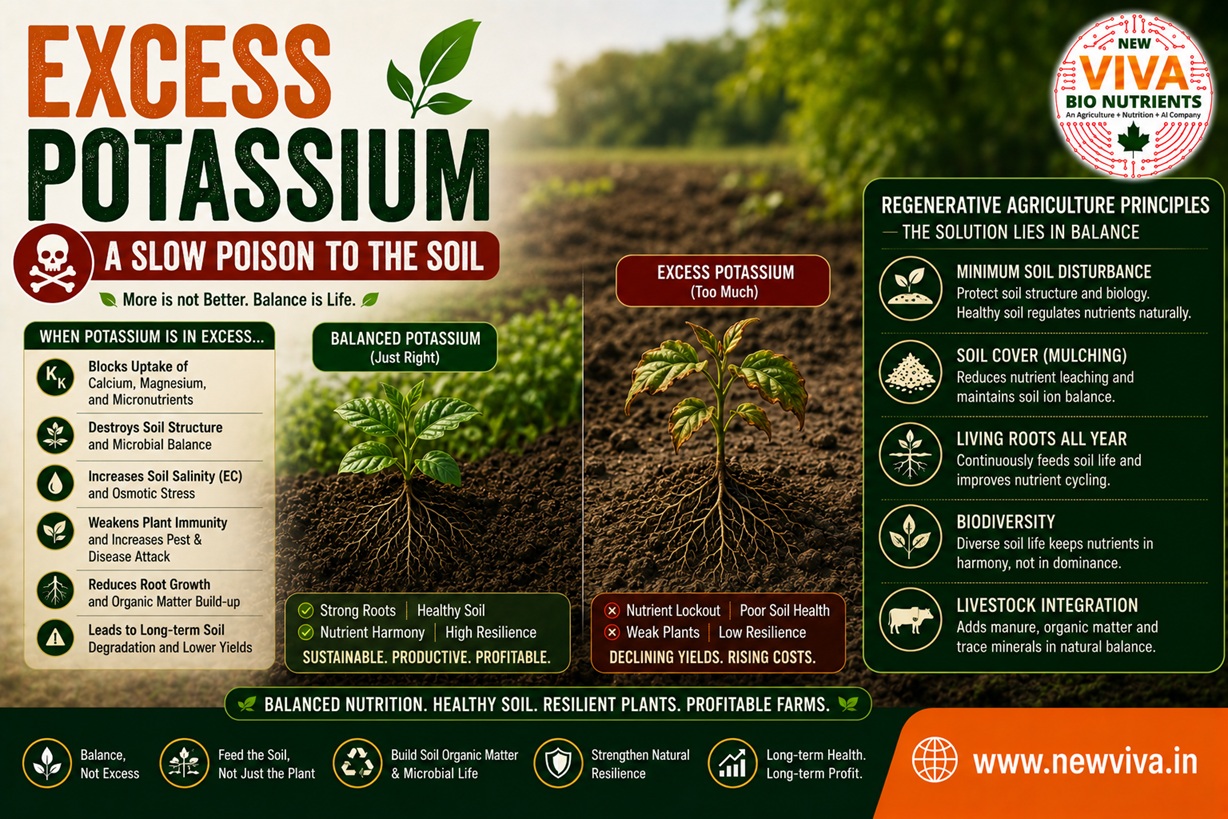
VV-022: Excess Potassium - A Slow Poison to the Soil
In the previous post, I had given a warning-like mention about potassium. But I felt this needed to be a separate post. That is this.
We think that chemical fertilizer is the only mistake, salt is the only enemy of the soil - but everything that comes naturally is good for the soil. This is a superficial understanding of agriculture and this is our weakness. The peacock is a mountain bird. Today it is more abundant in the plains. The reason for that is - the fox population has decreased. But what are we doing about it? We are making peacock chasing into a business. Our solution is not chasing away peacocks. It lies with the fox. Agriculture is the same. It is true that applying potassium gives a higher yield. But if you apply too much potassium, it will lock up other nutrients and ruin the soil for a long time. And we end up chasing other nutrients.
Potash - a huge nutritional deception! World-renowned regenerative agriculture scientists Graeme Sait and John Kempf have very clearly proven one thing in their research: Dumping potash fertilizers/compost or manure again and again into a soil already rich in potassium... is the worst act that destroys the crop's natural disease resistance, spoils the quality of produce, and locks up other essential minerals in the soil!
Now let's see what happens when Potassium Dominance increases in your soil.
1. Nutrient Antagonism: Calcium and Magnesium Lockup!
In soil science, no nutrient works alone; they act like a seesaw board, being either enemies or friends to each other. When you apply too much of a nutrient with a positive cation charge in the soil... it will push aside and lock up other similar nutrients, preventing the crop from absorbing them.
Potassium is a rough nutrient. When potassium increases in your soil, it puts a Triple Lockout:
Excess Potassium -> Locks up Calcium (Ca), Magnesium (Mg), and Boron (B).
- Calcium Collapse: Calcium is a nutrient that struggles greatly to move within a plant. As Graeme Sait says, if there is excess potassium in the soil, the crop cannot even reach out to grab calcium. Without calcium, cell walls weaken. This is why mangoes burst on the tree, banana leaf edges burn, and fruits rot immediately after harvest.
- Magnesium Lockup: According to the plant nutrition rules given by John Kempf, magnesium is also very important for photosynthesis. When potassium dominates, the crop faces severe magnesium deficiency. Because of this, the chlorophyll engine doesn't work, photosynthesis slows down, and your crop's Brix level drops.
2. Breaking the Plant Health Pyramid: A Free Invitation for Sap-Sucking Pests!
Remember the second stage of the Plant Health Pyramid we saw in WA-014 (complete protein formation). We saw that if the plant finishes building the nitrogen it absorbs from roots into complete protein before sunset, then sap-sucking pests like aphids and leafhoppers cannot pose any threat.
But excess potassium ruins this protein factory! Since potassium is the nutrient that controls the plant's water balance, when it is excessive, the plant absorbs too much water and bloats itself.
Because of this, the leaf sap becomes watery instead of thick. Brix levels drop. As a result, undigested raw amino acids and nitrates accumulate like garbage in the leaf sap at night. In short, you are turning your premium crop into a crunchy pest garbage bin, inviting all the aphids and whiteflies in the neighbourhood to "come eat"!
The Alternative Path Farmers Must Take:
If your soil test report shows Potassium as "High"... please stop dumping potash (chemical and natural) fertilizers into the soil from today itself! It means you are burning your own money with your own hands.
I am not saying the crop does not need potassium to transport sugar to the fruit during the fruit-filling phase. But don't apply it to the soil! Instead, "Ammonium Sulphate or Potassium Sulphate (OMRI Listed)" or there is a solution for this in Korean Natural Farming practices. These fertilizers can be applied in the correct dosage as a Precision Foliar Spray.
Foliar spraying will not touch the calcium and magnesium locks in the soil; it directly delivers the nutrient to the leaf factory at a very low cost. This frees up the calcium and magnesium in the soil, helping your crop grow with good weight and pest resistance. Stop farming out of habit. Trust the data, keep the potash bags aside, let the soil breathe a little in peace!
Let me say one more thing here. The fertilizer that farmers mostly use today for potash is "Muriate of Potash". Its chemical name is Potassium Chloride. It is the most salt-rich fertilizer available. Very harmful to soil. If chloride increases, the crop cannot absorb phosphorus. We must reduce the use of this fertilizer. But its price is very low. "Potassium Sulphate" is more expensive. What does John Kempf's research say? It says that with the same money we spend on Potassium Chloride, if we buy as much Potassium Sulphate as possible and apply it to the soil, we will get the same yield. It also says that soil fertility will improve. We should also use this science.
Finally, to properly understand what is high and what is low potassium levels - it is possible only if we know how much Calcium, Magnesium, and Sodium are in the soil. Otherwise, our agriculture is like letting a blind person run loose in a forest.
We'll talk more.
Tamil Version (தமிழ் வடிவம்)
VV-022: பொட்டாசியம் போதை — மண்ணுக்கு ஒரு மெதுவான விஷம்!
போன பதிவுல பொட்டாசியம் பத்தி ஒரு எச்சரிக்கை மாதிரி சொல்லி இருந்தேன். ஆனா இத தனி பதிவா சொல்லணும்னு தோணுச்சு. அது தான் இது.
நாம ரசாயன உரம் தான் தப்பு, உப்பு தான் மண்ணுக்கு எதிரி - ஆனா இயற்கையா கிடைக்குற எல்லாமே மண்ணுக்கு நல்லது அப்டிங்குற ஒரு மேலோட்டமான புரிதல்ல தான் விவசாயம் பண்றோம். இது தான் நம்ம பலவீனமும். மயில் ஒரு மலைப் பறவை. இன்னைக்கு அது சமவெளியில அதிகமா இருக்கு. அதுக்கு காரணம் - நரியின் எண்ணிக்கை குறைஞ்சிடுச்சு. ஆனா அதுக்கு நாம என்ன பண்றோம். மயில விரட்டுறத ஒரு தொழிலா பண்ணிக்கிட்டு இருக்கோம். நம்ம தீர்வு மயில விரட்டுரதல இல்லை. நரியில் இருக்கிறது. விவசாயமும் அப்படிதான். பொட்டாசியம் போட்ட பயிர் திரட்சியா வரும் என்பது உண்மை. ஆனா அளவுக்கு அதிகமா பொட்டாசியம் போட்டா, அது மற்ற சத்துக்களை லாக் பண்ணி மண்ணை ரொம்ப காலத்துக்கு பாழாக்கிடும். இந்த புரிதல் நமக்கு வரணும்.
பொட்டாஷ் - ஒரு மிகப்பெரிய ஊட்டச்சத்து ஏமாற்று வேலை! உலகப் புகழ்பெற்ற மீளுருவாக்க வேளாண் விஞ்ஞானிகளான கிரேம் சைட் (Graeme Sait) மற்றும் ஜான் கெம்ப் (John Kempf) தங்களது ஆராய்ச்சிகளில் ஒன்றை மிகத் தெளிவா நிரூபிச்சிருக்காங்க: ஏற்கனவே பொட்டாசியம் நிறைந்துள்ள ஒரு மண்ணில், மீண்டும் மீண்டும் பொட்டாஷ் உரங்களையோ / கம்ப்போஸ்டையோ அல்லது எருவையோ கொட்டுவது... பயிரோட இயற்கை நோய் எதிர்ப்புச் சக்தியைக் கெடுத்து, காய்களின் தரத்தைக் குலைத்து, நிலத்தில் இருக்கும் மற்ற அத்தியாவசிய கனிமங்களை லாக் செய்யுற மிக மோசமான செயலாகும்!
உங்க மண்ணுல பொட்டாசியத்தோட ஆதிக்கம் (Potassium Dominance) அதிகமாகும்போது என்ன நடக்குதுன்னு இப்ப பார்ப்போம்.
1. சத்துக்களின் பரஸ்பர பகை: கால்சியம் மற்றும் மெக்னீசியம் முடக்கம்!
மண் அறிவியல்ல, எந்த ஒரு சத்தும் தனியா வேலை செய்யாது; அதுங்க ஒன்னுக்கு ஒன்னு எதிரி அல்லது நண்பனா ஒரு சீசா (Seesaw) பலகை மாதிரி இயங்குது. மண்ணுல நேர்மின் அயனி (Cation) கொண்ட ஒரு சத்தை நீங்க அளவுக்கு அதிகமா கொட்டும்போது... அது மத்த சமமான சத்துக்களை பயிர் எடுக்க விடாமல் நெட்டித் தள்ளி பூட்டிடும்.
பொட்டாசியம் ஒரு முரட்டுத்தனமான சத்து. உங்க மண்ணுல பொட்டாசியம் அதிகமாகும்போது அது ஒரு மும்முனை பூட்டை (Triple Lockout) போடுது:
அதிகப்படியான பொட்டாசியம் -> கால்சியம் (Ca), மெக்னீசியம் (Mg), மற்றும் போரான் (B) சத்துக்களை லாக் செய்யும்.
- கால்சியம் வீழ்ச்சி: ஒரு தாவரத்துக்குள்ள நகர்வதற்கு ரொம்ப சிரமப்படுற ஒரு சத்து கால்சியம். கிரேம் சைட் சொல்ற மாதிரி, அதிகப்படியான பொட்டாசியம் மண்ணுல இருந்தா, பயிரால கால்சியத்தை எட்டிப் பிடிக்கவே முடியாது. கால்சியம் இல்லனா செல்களோட சுவர்கள் பலவீனமாகிடும். இதனாலதான் மாம்பழங்கள் மரத்திலேயே வெடிக்கிறது, வாழையில இலை ஓரங்கள் கருகிறது, மற்றும் காய்கள் பறிச்ச உடனே அழுகிப் போறது நடக்குது.
- மெக்னீசியம் முடக்கம்: ஜான் கெம்ப் தந்துள்ள தாவர ஊட்டச்சத்து விதிகளின்படி, மெக்னீசியமும் சூரிய ஒளிச்சேர்க்கைக்கு ரொம்ப முக்கியம். பொட்டாசியம் ஆதிக்கம் செலுத்தும்போது, பயிருக்கு கடுமையான மெக்னீசியம் பற்றாக்குறை வரும். இதனால பச்சைய எஞ்சின் (Chlorophyll) வேலை செய்யாது, ஒளிச்சேர்க்கை வேகம் குறைந்து, உங்க பயிரோட ப்ரிக்ஸ் (Brix) அளவு சரியும்.
2. தாவர ஆரோக்கிய பிரமிடு உடைதல்: சாறு உறிஞ்சும் பூச்சிகளுக்கு ஃப்ரீ இன்விடேஷன்!
நாம WA-014-ல பார்த்த தாவர ஆரோக்கிய பிரமிடோட இரண்டாம் கட்டத்தை (முழுமையான புரோட்டீன் உருவாக்கம்) ஒரு நிமிடம் நினைத்துப் பாருங்க. வேர் உறிஞ்சுற நைட்ரஜனை சூரியன் மறையுறதுக்குள்ள செடி முழுமையான புரோட்டீனா தச்சு முடிச்சிட்டா... அதுக்கு இலைப்பேன், அசுவினி போன்ற சாறு உறிஞ்சும் பூச்சிகளால எந்த ஆபத்தும் வராதுன்னு பார்த்தோம்.
ஆனா அதிகப்படியான பொட்டாசியம் இந்த புரோட்டீன் தொழிற்சாலையைக் கெடுத்துடும்! பொட்டாசியம் செடியோட தண்ணீர் சமநிலையைக் கட்டுப்படுத்துற சத்து என்பதால், அது அதிகமாகும்போது செடி அளவுக்கு அதிகமா தண்ணீரை உறிஞ்சி உடம்பை உப்ப வச்சுக்கும்.
இதனால இலைச்சாறு திக்கா இல்லாம தண்ணீர் மாதிரி நீர்த்துப் போகும். ப்ரிக்ஸ் அளவு குறையும். இதனால செரிக்கப்படாத பச்சை அமினோ அமிலங்களும், நைட்ரேட்டுகளும் இரவு நேரத்துல இலைச்சாறுல குப்பை மாதிரி தேங்கி நிக்கும். சுருக்கமா சொன்னா, உங்க பிரீமியம் பயிரை நீங்களே ஒரு சவசவப்பான பூச்சிக் குப்பைத் தொட்டியா மாத்தி, சுத்துப்பட்டுல இருக்குற எல்லா இலைப்பேன், வெள்ளை ஈக்களையும் "சாப்பிட வாங்க"னு கூப்பிடுறீங்க!
விவசாயிகள் செய்ய வேண்டிய அந்த மாற்று வழி:
உங்க மண் பரிசோதனை ரிப்போர்ட்ல பொட்டாசியம் "High" அப்படின்னு வந்துட்டா... தயவுசெஞ்சு மண்ணுல பொட்டாஷ் (ரசாயனம் மற்றும் இயற்கை) உரங்களை அள்ளிப் போடுறதை இன்னைக்கே நிறுத்துங்க! நீங்க உங்க காசை உங்க கைகளாலேயே கொளுத்துறீங்கன்னு அர்த்தம்.
காய் திரட்சி பருவத்துல (Fruit-filling phase) சர்க்கரையை பழத்துக்குக் கடத்த பயிருக்குக் கண்டிப்பா பொட்டாசியம் தேவைதான், இல்லைன்னு சொல்லல. ஆனா அதை மண்ணுல போடாதீங்க! அதுக்கு மாற்றா "அம்மோனியம் சல்பேட் அல்லது பொட்டாசியம் சல்பேட் (Potassium Sulphate) (OMRI Listed)" அல்லது கொரியன் இயற்கை விவசாய நடைமுறைல இதுக்கு தீர்வு இருக்கு. இந்த உரங்களை சரியான அளவில் இலைவழியாகத் தெளிக்கலாம் (Precision Foliar Spray).
இலைவழித் தெளிப்பு மண்ணுல இருக்குற கால்சியம், மெக்னீசியம் பூட்டுகளைத் தொடாது; நேரடியா இலைத் தொழிற்சாலைக்கு மிகக் குறைந்த செலவுல சத்தைக் கொண்டு போய் சேர்க்கும். இதனால மண்ணுல இருக்குற கால்சியமும் மெக்னீசியமும் ஃப்ரீயாகி, உங்க பயிரை நல்லா எடையோடவும், பூச்சி எதிர்ப்பு சக்தியோடவும் வளர்க்கும். பழக்க தோஷத்துல விவசாயம் செய்யுறதை நிறுத்துங்க. டேட்டாவை நம்புங்க, பொட்டாஷ் மூட்டைகளை ஓரமா வைங்க, மண் கொஞ்சம் நிம்மதியா சுவாசிக்கட்டும்!
இங்க இன்னொன்றையும் சொல்லிடறேன். விவசாயிகள் இன்னைக்கு பொட்டாஷ்-கக்கு பயன்படுத்துற உரம் பெரும்பாலும் "மியுரேட் ஆஃப் பொட்டாஷ்" ஆகத் தான் இருக்கும். இதனுடைய கெமிக்கல் பேர் - பொட்டாசியம் குளோரைட் (Potassium Chloride). இருக்கறுதுலேயே மிக அதிக உப்புத் தன்மை வாய்ந்த உரம். மண்ணுக்கு மிகவும் கெடுதல். குளோரைட் ஜாஸ்தி ஆனா பாஸ்பரஸ்-அ பயிரால எடுத்துக்க முடியாது. இந்த உரம் பயன்படுத்துறத குறைக்கணும். ஆனா இதன் விலை ரொம்ப கம்மி. "பொட்டாசியம் சல்பேட்" விலை ஜாஸ்தி. ஜான் கெம்ப்போட ஆராய்ச்சி என்ன சொல்லுது அப்படின்னா - நாம பொட்டாசியம் குளோரைட்-க்கு செலவு பண்ற அதே பணத்த வச்சு, எவ்வளவு பொட்டாசியம் சல்பேட் வாங்க முடியுமோ அதை வாங்கி, மண்ணுல போட்டாலே அதே விளைச்சல் கிடைக்கும். அதோட மண் வளமும் மேம்படும்னு சொல்லுது. இந்த அறிவியலையும் நாம பயன்படுத்தணும்.
கடைசியா, பொட்டாசியம் அளவு எது அதிகம், எது கம்மி அப்படின்னு நமக்கு சரியா புரியனும்னா - மண்ணுல எவ்வளவு கால்ஷியம், மெக்னீஷியம் மற்றும் சோடியம் இருக்குன்னு தெரிஞ்சாத் தான் அது சாத்தியம். அது இல்லைனா, நம்ம விவசாயம் - கண்ண கட்டி காட்டுல விட்ட கதை தான்.
இன்னும் பேசுவோம்.
ரவிசங்கர் கருப்பையா
New ViVa Bio Nutrients
www.newviva.in
934 204 9144