குறிப்பு - இதன் தமிழாக்கம் இந்த பக்கத்தில் சற்று கீழே உள்ளது.
Join our WhatsApp group here -> https://chat.whatsapp.com/DtRfcPrnZykIfmavZU6kj0
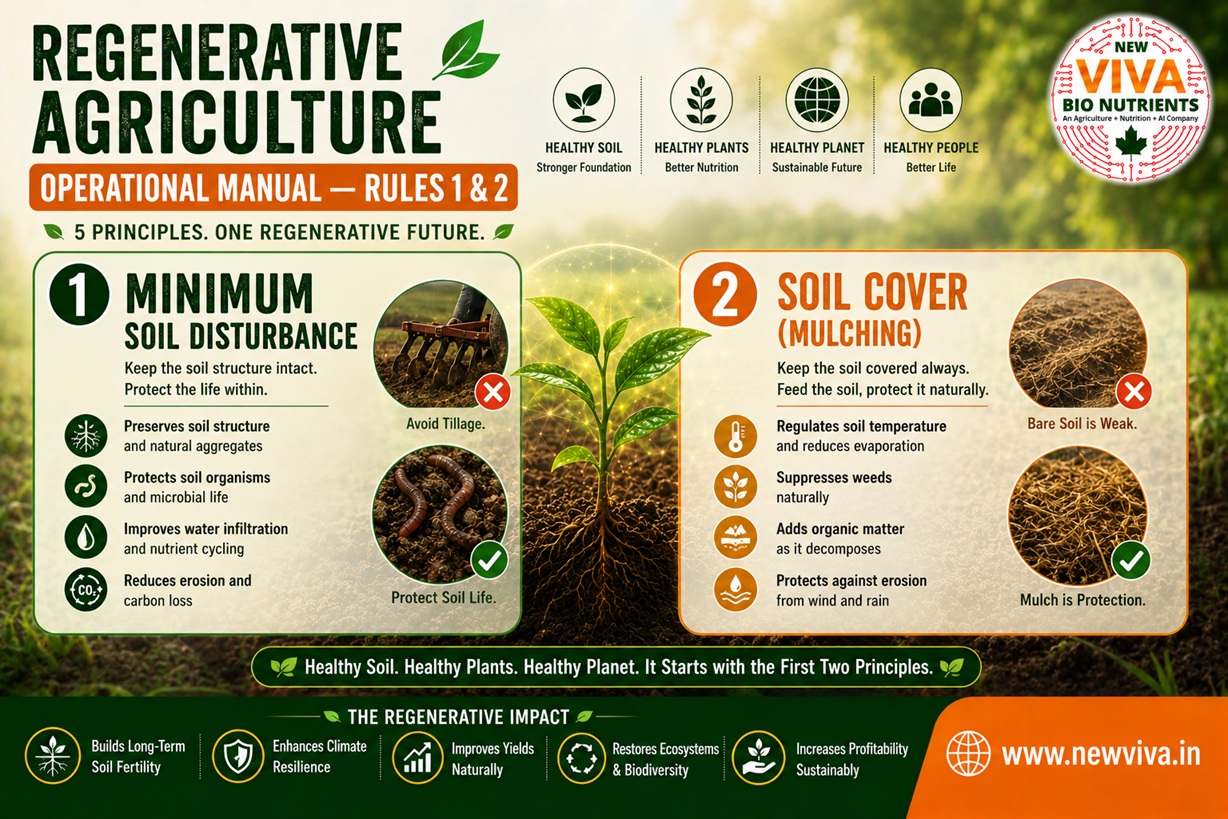
VV-019: Regenerative Agriculture / Nutrition Farming - Operational Manual — Rules 1 & 2
So far, we have seen why Regenerative Agriculture is necessary. Now, let's see how to put this farming into practice. There are 5 basic rules for this. Let's look at the first two rules here.
Imagine your soil as a big, beautiful city. If a terrible earthquake hits that city once every three months... will the people there be able to run big factories or a peaceful business? They cannot. They will always be struggling just to save their lives. To make this biological city operate at peak speed, we need to apply the first two operational rules.
Rule 1: Reduced Tillage (Minimize Soil Disturbance)
Today, due to modern agricultural influence, we have been taught that we should plough the land deeply and frequently. We think that turning the soil into powder using a rotavator is the hallmark of a good farmer.
But what does science say? Frequent ploughing is like giving continuous earthquakes to the microorganisms living beneath your soil!
Do you remember the fungal networks (Mycorrhizae) we saw in WA-002? These tiny fungal wires work like an internet under the earth... pulling water, zinc, and phosphorus nutrients from a distance and delivering them to the roots of your mango tree or banana plant. When you use a heavy tractor rotavator to churn the soil deeply and widely, you are cutting those fungal wires into millions of pieces!
We are not asking you to stop ploughing entirely from day one—that is not possible in already compacted soil either. Instead, we should adopt the "Reduced Tillage" method.
-
Keep your ploughing very shallow and minimal, only when necessary for sowing seeds or making beds for trees.
-
In our tradition, there is a proverb that says, "Deep ploughing is better than wide ploughing." The truth is that we have not fully understood this properly yet. There is a tractor attachment called a "Sub Soiler" similar to traditional plough device. With this, you can plough deeply in a single line. This is a tillage method that causes less damage to the soil.
-
When you reduce deep, wide, and aggressive rotavator, five-bottom plough, and disc plough tillage... the soil begins to heal on its own. Your "free labourers" (microorganisms) under the soil will survive, and roots will grow with proper aeration without suffocating.
Rule 2: Soil Cover (Mulching)
In our area, in the scorching 40°C heat, what would happen if you made someone sit out in the open for six hours without any umbrella or tent? All the water in their body would evaporate, and their skin would get burnt, right?
The same thing happens to your bare soil. The earth does not like to be exposed and dried out in the open without covering its body. When you leave the soil between your trees bare and exposed... the sun's heat burns the topsoil, turns it into something like a cement rock, and evaporates and steals away the precious organic carbon present in the soil. The good microorganisms will die off within a few hours.
The second rule is keeping the soil always covered through Mulching—that is, putting a protective coat on your land!
Here are the economic benefits you get by always covering the soil using crop residues available in your field (banana leaves, coconut fronds, dried grass, twigs) or special mulching sheets:
- Water requirement will reduce by 30% to 50%: Since the mulch prevents direct sunlight from falling on the moist soil, water does not evaporate and stays within the soil like a sponge.
- A paradise for microorganisms: Under this dark and moist mulch, the temperature will drop by several degrees even during summer. This acts like a super air-conditioned room for our earthworms and fungi, and they start working busily 24 hours a day.
"Once we bring about a change in the tillage methods we saw earlier, this second rule becomes a bit easier. Similarly, if we stop burning crop residues, chop them into pieces, and spread them on the soil, that is also good. Every village should have a common machine to pulverise crop residues. Burning crop residues must be banned."
What We Must Understand:
If you frequently create earthquakes with a tractor and leave the soil to dry in the sun... the soil's mineral balance will not be maintained, and the crop will not gain disease resistance. When you keep tillage shallow and minimal, and always keep the soil covered with crop residues... your bio-engine will start running at 100% speed.
In the next post, we will see Rules 3 & 4: Living Roots & Biodiversity—about how keeping the land green throughout the year works like a permanent salary for your land.
We'll talk more!
Ravishankar Karuppiah 934 204 9144
Tamil Version (தமிழ் வடிவம்)
VV-019: மீளுருவாக்க விவசாயம் / ஊட்டச்சத்து விவசாயம் - செயல்பாட்டு கையேடு — விதி 1 & 2
இதுவரை, ஊட்டச்சத்து விவசாயம் (Regenerative Agriculture) ஏன் தேவை என்பதைப் பார்த்தோம். இனி, இந்த வேளாண்மையை எவ்வாறு நடைமுறையில் செய்வது என்று பார்ப்போம். இதற்க்கு 5 அடிப்படை விதிகள் உள்ளன. முதல் இரண்டு விதிகளை இங்கே காண்போம்.
உங்க மண்ணை ஒரு பெரிய, அழகான நகரம் மாதிரி கற்பனை பண்ணிக்கோங்க. அந்த நகரத்துல மூணு மாசத்துக்கு ஒருக்கா பயங்கரமான நிலநடுக்கம் வந்தா... அங்க இருக்குற மக்களால் பெரிய ஃபேக்டரிகளையோ இல்ல நிம்மதியான தொழிலையோ நடத்த முடியுமா? முடியாது. அவங்க எப்பவும் உயிரைக் காப்பாத்திக்கவே போராடிட்டு இருப்பாங்க. இந்த உயிரியல் நகரத்தை உச்சகட்ட வேகத்துல இயங்க வைக்க, நாம் முதல் இரண்டு செயல்பாட்டு விதிகளைப் பயன்படுத்த வேண்டும்.
விதி 1: குறைந்த நில உழவு (Reduced Tillage / Minimize Soil Disturbance)
இன்னைக்கு நவீன விவசாயத் தாக்கத்தால, நாம நிலத்தை ஆழமாவும், அடிக்கடி உழணும்னு கத்து வச்சிருக்கோம். ரோட்டாவேட்டர் வச்சு மண்ணை பவுடர் மாதிரி மாத்துறதுதான் ஒரு நல்ல விவசாயிக்கு அடையாளம்னு நாம நினைக்கிறோம்.
ஆனா அறிவியல் என்ன சொல்லுதுனா, அடிக்கடி உழுறது உங்க மண்ணுக்கு அடியில இருக்குற நுண்ணுயிர்களுக்குத் தொடர் நிலநடுக்கம் குடுக்குற மாதிரி!
நாம WA-002-ல பார்த்த பூஞ்சை வலைப்பின்னல்கள் (Mycorrhizae) நினைவிருக்கா? இந்த நுண்ணிய பூஞ்சை ஒயர்கள் தான் பூமிக்கு அடியில ஒரு இன்டர்நெட் மாதிரி வேலை செஞ்சு... தூரத்துல இருக்குற தண்ணீரையும், ஜிங்க் மற்றும் பாஸ்பரஸ் சத்துக்களையும் இழுத்துட்டு வந்து உங்க மாமரம் அல்லது வாழையோட வேருக்குக் குடுக்குது. நீங்க ஹெவி டிராக்டர் ரோட்டாவேட்டரை வச்சு நிலத்தை ஆழமாவும், அகலாமாவும் கிளறும்போது, அந்த பூஞ்சை ஒயர்களை கோடிக்கணக்கான துண்டுகளா நீங்க வெட்டி எறியுறீங்க!
நாங்க உங்களை முதல் நாளே உழவு செய்யறதை மொத்தமா நிறுத்தச் சொல்லல—ஏற்கனவே இறுகிப்போன நிலத்துல அது சாத்தியமும் இல்லை. அதுக்கு மாற்றா நாம "குறைந்த உழவு" (Reduced Tillage) முறையைக் கையாளணும்.
-
உங்க உழவை ரொம்ப ஆழமில்லாம மேலோட்டமாவும் (Shallow tilling), விதை போடுறதுக்கோ அல்லது மரங்களுக்குப் பாத்தி கட்டுறதுக்கோ தேவையான போது மட்டும் மிகக் குறைந்த அளவில் வச்சுக்கோங்க.
-
நம் மரபுல "அகல உழுவதை விட, ஆழ உழுவதே மேல்" அப்படின்னு ஒரு பழமொழி இருக்கு. இதை இன்னும் நாம் சரியாக புரிஞ்சிக்கல என்பது தான் உண்மை. உளி கலப்பை-ன்னு ஒரு டிராக்டர் அட்டாச்மென்ட் உண்டு. நம்ம பாரம்பரிய உளி கலப்பை போலவே அது இருக்கும். இத ஆங்கிலத்தில "Sub Soiler"-ன்னு சொல்லுவாங்க.ஒரு கோடு போல இதில் ஆழமாக உழவு செய்யலாம். இது மண்ணுக்கு அதிகம் பாதிப்பில்லாத ஒரு உழவு முறை.
-
ஆழமான, அகலமான, மொரட்டுத்தனமான ரோட்டாவேட்டர், ஐந்து கலப்பை, சட்டி கலப்பை உழவைக் குறைக்கும் போது... மண் தானா குணமாகத் தொடங்கும். மண்ணுக்கு அடியில இருக்குற உங்க "இலவச தொழிலாளிகள்" (நுண்ணுயிர்கள்) உயிரோடு இருப்பாங்க, வேர்கள் மூச்சுத்திணறாமல் காற்றோட்டமா வளரும்.
விதி 2: மண்ணை மூடி வைத்தல் (Soil Cover / Mulching)
நம்ம ஊர்ல 40°C கொளுத்துற வெயில்ல, எந்த ஒரு குடையோ இல்ல கூடாரமோ இல்லாம உங்களை ஆறு மணி நேரம் வெட்டவெளியில உட்கார வச்சா என்னாகும்? உடம்புல இருக்குற தண்ணி மொத்தமும் வத்தி, தோல் கருகிப் போயிடுவீங்க இல்லையா?
வெற்றா கிடக்குற உங்க மண்ணுக்கும் அதேதான் நடக்குது. பூமிக்குத் தன் உடம்பை எப்பவும் மூடி வைக்காம வெட்டவெளியில காயப்போடப் பிடிக்காது. உங்க மரங்களுக்கு நடுவுல இருக்குற மண்ணை நீங்க அப்படியே வெற்றா காயப்போடும் போது... சூரிய வெப்பம் மேல் மண்ணைச் சுட்டெரிச்சு, அதை ஒரு சிமெண்ட் பாறை மாதிரி மாத்தி, மண்ணுக்குள்ள இருக்குற விலைமதிப்பற்ற கரிமக் கார்பனை (Organic Carbon) காத்துல ஆவியாக்கித் திருடிட்டு போயிடும். நல்ல நுண்ணுயிர்கள் சில மணி நேரத்துல காஞ்சு செத்துப்போயிடும்.
இரண்டாவது விதி என்னவென்றால், மூடாக்கு (Mulching) மூலம் மண்ணை எப்போதும் மூடி வைத்திருப்பது—அதாவது உங்க நிலத்துக்கு ஒரு பாதுகாப்பு கோட் போடுவது!
உங்க வயல்ல கிடைக்கிற பயிர்க் கழிவுகள் (வாழை இலைகள், தென்னை மட்டைகள், காய்ந்த புல், தட்டைகள்) அல்லது பிரத்யேக மல்ச்சிங் ஷீட்டுகளை வச்சு மண்ணை எப்பவும் மூடி வைக்கிறதுனால உங்களுக்குக் கிடைக்கிற பொருளாதார லாபங்கள் இதோ:
- தண்ணீர் தேவை 30% முதல் 50% வரை குறையும்: மூடாக்கு சூரிய வெளிச்சம் நேரடியாக ஈரமண்ணுல படுறதைத் தடுக்குறதால, தண்ணீர் ஆவியாகாம ஒரு பஞ்சு போல மண்ணுக்குள்ளேயே தங்கிடும்.
- நுண்ணுயிர்களின் சொர்க்கபுரி: இருட்டாகவும் ஈரப்பக்கமாகவும் இருக்குற இந்த மூடாக்குக்கு அடியில, வெயில் காலத்துலயும் வெப்பநிலை பல டிகிரி குறையும். இது நம்ம மண்புழுக்களுக்கும் பூஞ்சைகளுக்கும் ஒரு சூப்பர் ஏர்கண்டிஷன் ரூம் மாதிரி அமைஞ்சு, அதுங்க 24 மணி நேரமும் பிஸியா வேலை செய்ய ஆரம்பிக்கும்.
"நாம முதல்ல பார்த்த உழவு முறைகல்ல ஒரு மாற்றத்தை கொண்டு வந்துட்டா, இந்த இரண்டாவது விதி கொஞ்சம் ஈசி ஆய்டும். அதே போல பயிர் கழிவுகள எரிக்கமா அத துண்டுகளாக்கி மண்ணுல படர விட்டோம்-னா அதுவும் நல்லது. ஒவ்வொரு கிராமத்திலும் - பயிர் கழிவை தூளாக்குற மெஷின் பொதுவா இருக்கணும். பயிர எரிக்கிறத தடை செய்யணும்."
நாம புரிஞ்சுக்க வேண்டிய விஷயம்:
அடிக்கடி டிராக்டர் விட்டு நிலநடுக்கம் உண்டாக்கி, வெயில்ல காயப்போட்டா... மண்ணோட மினரல் பேலன்ஸும் மாறாது, பயிருக்கு நோய் எதிர்ப்பு சக்தியும் வராது. உழவை ஆழமில்லாம குறைந்த அளவா வச்சுக்கிட்டு, மண்ணை எப்பவும் பயிர்க் கழிவுகளால் மூடி வைக்கும் போது... உங்க பயோ-எஞ்சின் 100% வேகத்துல ஓட ஆரம்பிக்கும்.
அடுத்த பதிவுல, நிலத்தை வருஷம் முழுக்கப் பச்சையா வச்சுக்கிறது எப்படி உங்க நிலத்துக்கு ஒரு நிரந்தர சம்பளம் மாதிரி வேலை செய்யுதுன்னு விதி 3 & 4: உயிருள்ள வேர்கள் மற்றும் பல்லுயிர் பெருக்கம் (Living Roots & Biodiversity) பற்றிப் பார்ப்போம்.
இன்னும் பேசுவோம்!
ரவிசங்கர் கருப்பையா 934 204 9144