VV-020: Regenerative Agriculture / Nutrient Agriculture - Operations Manual — Rules 3, 4 & 5
குறிப்பு - இதன் தமிழாக்கம் இந்த பக்கத்தில் சற்று கீழே உள்ளது.
Join our WhatsApp group here -> https://chat.whatsapp.com/DtRfcPrnZykIfmavZU6kj0
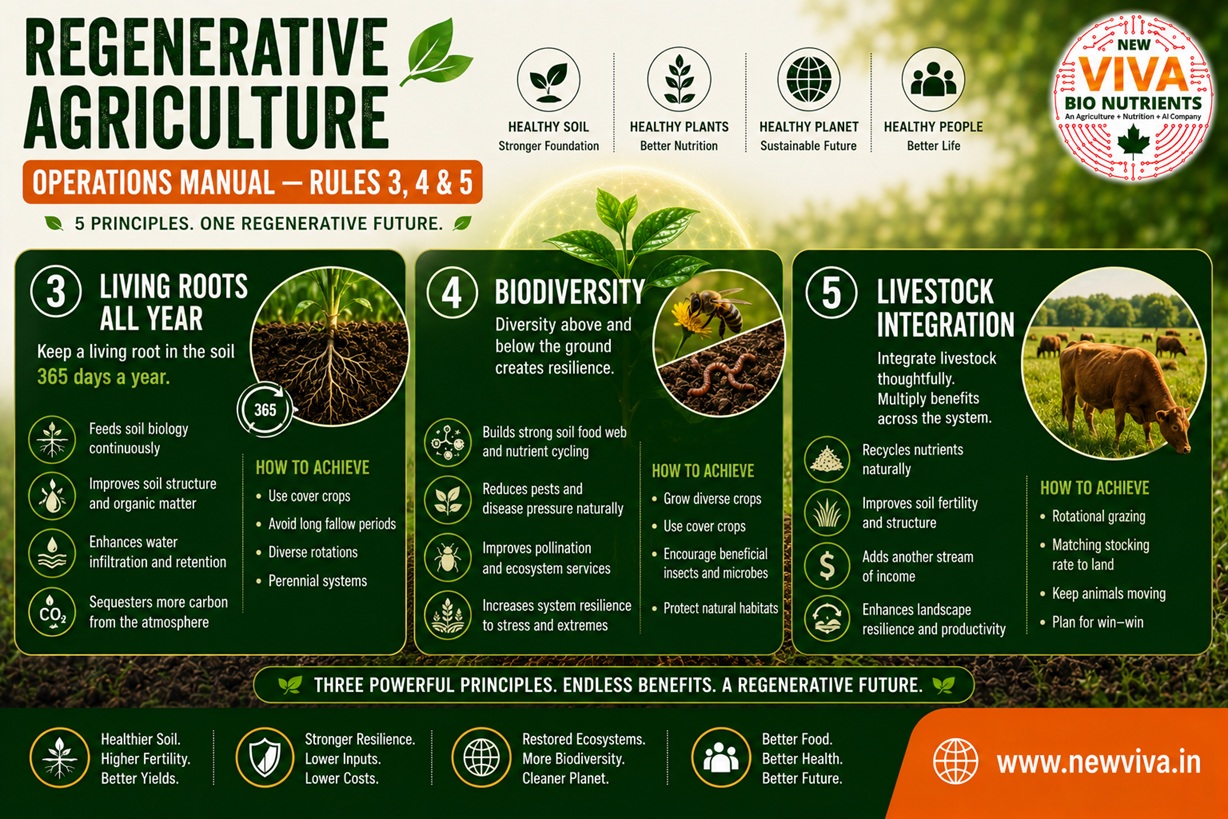
In the last post, we saw how to protect the biological city beneath our soil from earthquakes (through reduced tillage) and from intense heat (through mulching). Today we are going to go into the final three operational rules of regenerative / nutrient agriculture and fully understand its key foundations: Living Roots Year-Round, Biodiversity, and Livestock Integration.
If you keep your soil alive only when your main crop is present, and leave it to dry out on other days or isolate the land from the animal environment... it means you are running your farm like a daily wage laborer. When you fully apply these rules, your farm will transform into a natural system with permanent salary and rotation. Let's now look at the science behind this.
Rule 3: Living Roots Year-Round
Remember the rhizosphere (underground hotel) we saw in WA-010? We learned that living plants pump up to 40% of their solar energy as liquid sugar (root exudates) into the soil to obtain nutrients from microorganisms.
What happens when a farmer harvests a crop and leaves the land fallow for two or three months between seasons? Or what happens in a mango orchard or coconut plantation when the space between trees is always kept clean and bare?
The food supply stops. That underground hotel gets locked!
Because the sugar money through roots is not available, the good bacteria and fungal networks in the soil starve and die en masse. Then when you plant the next crop, there will be no workers there to work. Again you will be forced to buy chemical fertilizers from the shop and feed the plants to make them grow.
- Regenerative method: We never leave the land fallow. In the gaps where there is no main crop, or in the pathways between trees, we must grow various intercrops or cover crops.
- Its benefit: Even if those crops don't give us direct money, they keep the sugar pump running inside the soil. Because of this, the microorganisms are never hungry and stay strong in your land. The moment you plant the next main crop, they will start working!
Bringing this to irrigated paddy fields requires some effort. But in other lands, this can definitely be implemented. There is a model called "Syntropic Agroforestry." An agroforestry system that started in Brazil and is now being famously implemented worldwide. It is suitable for areas like ours where there are many small farmers. My goal is to bring this to farmers through "New Viva Bio Nutrients" as well. When the time comes, I will write about this in detail.
Rule 4: Biodiversity — Let's Break the Insects' Radar!
Nature absolutely does not like places where there is just one single crop (Monoculture). If you go into a forest, you cannot see just one single plant growing there. Nature always grows everything mixed together — grass, shrubs, creepers, and big trees.
But when we plant only bananas in acres of land, or keep a mango orchard completely pruned and neat... we are putting up a big 'welcome board' for pests!
Insects find their preferred plants through their smell and through certain electromagnetic signals. When the same crop is there for kilometers, that signal reaches the insects very strongly. All the aphids and whiteflies around your garden catch that signal and come running into your field.
Not only that, if there is only one crop, it secretes only one recipe of sugar through its roots. Because of this, only a particular microorganism in the soil gets to eat, while the microorganisms that extract other nutrients starve.
- Regenerative method: If it's short-term crops, we must bring in crop rotation. For long-term crops, we must bring in multi-species sowing. We must bring biodiversity to the land.
- Its benefit: Because different roots give different recipe sugars into the soil... all kinds of microorganisms in the soil grow abundantly and release all the nutrients in the Albrecht table to your crop!
There is a term in agricultural science called "Quorum Sensing." The science of how this biodiversity helps enrich the soil. I will write about this in detail in another article.
Rule 5: Livestock Integration — The Mobile Manure Factory
Agriculture and livestock are inseparable twins. Do you know how the soil fertility of this earth was built over crores of years? Because animals grazed in herds on the land, deposited their dung and urine there, and trampled plant residues into the soil with their hooves to decompose.
This natural cycle broke when modern agriculture started locking cattle in sheds and buying chemical fertilizers in bags for the land. When manure is piled up in one corner and left to dry in the sun, the nitrogen in it escapes into the air. But when livestock are grazed on the land in a planned manner, something wonderful happens.
- Biological trigger: When a goat or cow bites and eats a plant, its saliva, dung, and urine trigger a powerful defensive response at the plant's roots. Immediately, the plant pumps enormous amounts of growth hormones and tons of root exudates into the soil for rapid growth.
- Its benefit: The stomach of livestock works like a mobile microbial lab. The waste they deposit directly brings billions of good bacteria and digested mineral salts to the root zone. This completely breaks the C:N ratio lock we saw earlier. The transport cost and labor cost of bringing manure from outside are saved! The crop naturally advances to stages 3 and 4 of the Plant Health Pyramid.
In Tamil tradition, there is a proverb: "Don't just graze the surface like a cow" The reason is - when a cow bites the tip of grass, the plant's natural defense mechanism (Induced Systemic Response (ISR)) gets triggered. This makes the plant bitter. Because of this, the cow will not bite that plant again. This is why a cow always grazes only the tip grass. This natural defense mechanism causes various hormones to be secreted in the plant and its roots. This enriches the crop and the soil around it. This is how a cow adds strength to a piece of land. Only when cattle graze on a land will the soil become fully fertile. Not just because of its dung. This is our traditional science. There is also a big science to this called Pasture Management. That is, the multi-species sowing mentioned in Rule 4 must be managed by grazing cattle, not by plowing with a tractor. Those who truly want to do natural agriculture clearly need to deeply understand the science of this.
What we need to understand:
Agriculture is not a gamble that gives good profit for one season and turns the soil into a desert for the next season. By ensuring that there is a living root in the soil for all 365 days of the year, by increasing the number of crops systematically, and by integrating livestock... you can make your farm's natural supply chain permanent.
Now we have fully understood how to run the engine of the soil using these 5 basic rules.
Next, we will understand a compost report.
We'll talk more.
Request: It is my wish that this reaches farmers in all districts. Our health, our soil's health, the growth and health of our next generation — everything is contained in this. This is our future. Please share as much as possible. Connect those interested to our WhatsApp group. Thank you!
Tamil Version (தமிழ் வடிவம்)
VV-020: மீளுருவாக்க விவசாயம் / ஊட்டச்சத்து விவசாயம் - செயல்பாட்டு கையேடு — விதி 3, 4 & 5
கடந்த பதிவுல, நம்ம மண்ணுக்கு அடியில இருக்குற உயிரியல் நகரத்தை நிலநடுக்கத்துல இருந்தும் (குறைந்த உழவு மூலம்), கடுமையான வெயில்ல இருந்தும் (மூடாக்கு மூலம்) எப்படிப் பாதுகாக்குறதுன்னு பார்த்தோம். இன்னைக்கு நாம மீளுருவாக்க / ஊட்டச்சத்து வேளாண்மையின் இறுதி மூன்று செயல்பாட்டு விதிகளுக்குள் சென்று, இதன் முக்கிய அஸ்திவாரங்களை முழுமையாகப் புரிந்துகொள்ளவிருக்கிறோம்: ஆண்டு முழுவதும் உயிருள்ள வேர்கள் (Living Roots), பல்லுயிர் பெருக்கம் (Biodiversity), மற்றும் கால்நடை ஒருங்கிணைப்பு (Livestock Integration).
உங்க நிலத்துல முக்கிய பயிர் இருக்கும்போது மட்டும் மண்ணை உயிர்ப்பா வச்சுட்டு, மத்த நாட்கள்ல அதை அப்படியே காயப்போட்டாலோ அல்லது விலங்கின சூழலில் இருந்து நிலத்தைத் தனிமைப்படுத்தினாலோ... நீங்க உங்க பண்ணையை ஒரு தினக்கூலி தொழிலாளி மாதிரி நடத்துறீங்கன்னு அர்த்தம். இந்த விதிகளை நீங்க முழுமையா பயன்படுத்தும்போது, உங்க பண்ணை ஒரு நிரந்தர சம்பளம் வாங்குற, சுழற்சி முறை கொண்ட ஒரு இயற்கை சிஸ்டமா மாறும். இதோட அறிவியலை இப்ப பார்ப்போம்.
விதி 3: ஆண்டு முழுவதும் உயிருள்ள வேர்கள் (Living Roots Year-Round)
நாம WA-010-ல பார்த்த ரைசோஸ்பியர் (அண்டர்கிரவுண்ட் ஹோட்டல்) நினைவிருக்கா? உயிருள்ள செடிகள் தங்களோட சூரிய எனர்ஜியில 40% வரை திரவச் சர்க்கரையா (வேர்ச் சுரப்புகள்) மண்ணுக்குள்ள பம்ப் செஞ்சு, நுண்ணுயிர்கள்கிட்ட இருந்து சத்துக்களைப் பெற்றுக்கொள்ளுதுன்னு படிச்சோம்.
ஒரு விவசாயி ஒரு பயிரை அறுவடை செஞ்சுட்டு, அடுத்த சீசனுக்கு நடுவுல ரெண்டு மூணு மாசம் நிலத்தை சும்மா போடும்போது என்ன நடக்கும்? அல்லது ஒரு மாந்தோப்பு, தென்னந்தோப்புல மரங்களுக்கு நடுவுல இருக்குற இடத்தை எப்பவும் சுத்தமா, மொட்டையா வச்சிருந்தா என்ன நடக்கும்?
சாப்பாடு வர்றது நின்றுவிடும். அந்த அண்டர்கிரவுண்ட் ஹோட்டல் பூட்டப்படும்!
வேர்கள் வழியா வர்ற அந்தச் சர்க்கரைப் பணம் கிடைக்காததால, மண்ணுல இருக்குற நல்ல பாக்டீரியாக்களும் பூஞ்சை வலைப்பின்னல்களும் சாப்பாடு இல்லாம மொத்தமா பட்டினி கிடந்து செத்துப்போயிடும். அதுக்கப்புறம் நீங்க அடுத்த பயிரை நடும்போது, அங்க வேலை செய்ய ஆள் இருக்காது. மறுபடியும் நீங்க கடையில காசு குடுத்து கெமிக்கல் உரங்களை வாங்கி வந்து செடிக்கு ஊட்டி வளர்க்க வேண்டிய நிலைமை ஏற்படும்.
- மீளுருவாக்க முறை: நாம நிலத்தை ஒரு நாளும் சும்மா விடுறதே இல்லை. முக்கிய பயிர் இல்லாத இடைவெளிகள்ல, அல்லது மரங்களுக்கு நடுவுல இருக்குற பாதைகள்ல பலவிதமான ஊடுபயிர்களையோ அல்லது மூடாக்கு பயிர்களையோ (Cover Crops) வளர்க்கணும்.
- இதன் லாபம்: அந்தப் பயிர்கள் நமக்கு நேரடியா காசு தராட்டியும், மண்ணுக்குள்ள இருக்குற சர்க்கரை பம்பை அதுங்க ஓட வச்சுட்டே இருக்கும். இதனால நுண்ணுயிர்கள் எப்பவும் பசியில்லாம, நல்ல பலத்தோட உங்க நிலத்துல காத்துட்டு இருக்கும். நீங்க அடுத்த முக்கிய பயிரை நட்ட உடனே, அதுங்க வேலை செய்ய ஆரம்பிச்சிடும்!
ஆத்து தண்ணி பாய்கிற வயல்ல இதை கொண்டு வர்றதுக்கு கொஞ்சம் மெனகெடல் வேணும். ஆனா மற்ற நிலங்கள்ல, இதை கண்டிப்பா செயல் படுத்தலாம். "சின்ட்ரோபிக் வேளாண் காடுகள்" (Syntropic Agroforestry) அப்படின்னு ஒரு மாடல் இருக்கு. பிரேசில் நாட்டில் ஆரம்பிச்சு, இன்னைக்கு உலகம் முழுக்க பிரபலமா செயல்படுத்தபடற ஒரு வேளாண் காடு முறை. நம்ம மாதிரி சிறு விவசாயிகள் நிறைய இருக்குற பகுதிக்கு ஏற்றது. இதயும் "நியூ விவா பயோ நூட்ரீயண்ட்ஸ்" மூலமா விவசாயிகள் கிட்ட கொண்டு போகணும்னுறது என்னுடைய நோக்கம். காலம் வரும் போது இத பத்தியும் விரிவா எழுதுறேன்.
விதி 4: பல்லுயிர் பெருக்கம் (Biodiversity — பூச்சிகளின் ரேடாரை உடைப்போம்!)
இயற்கைக்கு 'ஒரே ஒரு பயிர் மட்டும்' (Monoculture) இருக்குற இடத்தை சுத்தமா பிடிக்காது. நீங்க ஒரு காட்டுக்குள்ள போய் பார்த்தீங்கன்னா, அங்க வெறும் ஒரே ஒரு செடி மட்டும் வளர்றதை உங்களால பார்க்க முடியாது. இயற்கை எப்பவும் புல்லு, செடி, கொடி, பெரிய மரம்னு எல்லாத்தையும் ஒன்னா கலந்துதான் வளர்க்கும்.
ஆனா நாம நம்ம வயல்ல ஏக்கர் கணக்குல வெறும் வாழையை மட்டும் நடுறது, இல்லனா சுத்தமா செதுக்கி வச்ச மாந்தோப்பை மட்டும் வச்சிருக்கும் போது... நாம பூச்சிகளுக்கு ஒரு பெரிய 'வெல்கம் போர்டு' வைக்கிறோம்!
பூச்சிகள் தங்களுக்குப் பிடிச்ச பயிர்களை அதோட வாசனையை வச்சும், ஒருவித மின்காந்த அலைகளை (Electromagnetic signals) வச்சும் தான் கண்டுபிடிக்குது. ஒரே பயிர் மட்டும் கிலோமீட்டர் கணக்குல இருக்கும்போது, அதோட சிக்னல் ரொம்ப ஸ்ட்ராங்கா பூச்சிகளுக்குக் கிடைக்கும். உங்க தோட்டத்த சுத்தி இருக்குற இலைப்பேன், வெள்ளை ஈ எல்லாம் அந்த சிக்னலை புடிச்சு உங்க வயலுக்குள்ள ஓடி வந்துடும்.
அதுமட்டுமில்லாம, ஒரே ஒரு பயிர் இருந்தா அது ஒரே ஒரு ரெசிபி சர்க்கரையைத்தான் வேர்ல சுரக்கும். இதனால மண்ணுல இருக்குற ஒரு குறிப்பிட்ட நுண்ணுயிர் மட்டும்தான் சாப்பிடும், மத்த சத்துக்களை எடுக்குற நுண்ணுயிர்கள் பட்டினி கிடக்கும்.
- மீளுருவாக்க முறை: குறுகிய கால பயிர்களா இருந்தா நாம பயிர் சுழற்சி முறைய கொண்டு வரணும். நீண்ட கால பயிர்களுக்கு நடுவுல பலதானிய விதைப்ப கொண்டு வரணும். நிலத்துல பல்லுயிர் பெருக்கத்தைக் கொண்டு வரணும்.
- இதன் லாபம்: வெவ்வேற வேர்கள் வெவ்வேற ரெசிபி சர்க்கரையை மண்ணுக்குள்ள குடுக்குறதால... மண்ணுல இருக்குற எல்லாவிதமான நுண்ணுயிர்களும் செழிப்பா வளர்ந்து, ஆல்பிரெக்ட் அட்டவணையில இருக்குற அத்தனை சத்துக்களையும் ரிலீஸ் செஞ்சு உங்க பயிருக்குக் குடுக்கும்!
கோரம் சென்சிங் (Quoram Sensing) அப்படின்னு விவசாய அறிவியல்ல ஒரு சொற்றொடர் இருக்கு. எப்படி இந்த பல்லுயிர் பெருக்கம் மண்ணை வளமாக்க உதுவுது அப்படின்றதுக்கான அறிவியல். இத பத்தியும் விரிவா இன்னொரு கட்டுரையில எழுதுறேன்.
விதி 5: கால்நடை ஒருங்கிணைப்பு (Livestock Integration — நடமாடும் உரத் தொழிற்சாலை)
விவசாயமும் கால்நடைகளும் பிரிக்க முடியாத இரட்டையர்கள். பல கோடி ஆண்டுகளா இந்த பூமியோட மண் வளம் எப்படி உருவானது தெரியுமா? விலங்கினங்கள் கூட்டமா நிலத்துல மேய்ந்து, தங்களோட சாணத்தையும் சிறுநீரையும் அங்கேயே கழித்து, தாவரக் கழிவுகளைத் தங்களோட குளம்புகளால் மிதிச்சு மண்ணுக்குள்ள மட்க வச்சதுனாலதான்.
நவீன விவசாயத்துல மாடுகளைத் தொழுவத்துல மட்டும் பூட்டி வச்சுட்டு, நிலத்துக்கு மூட்டை மூட்டையா கெமிக்கல் உரங்களை வாங்க ஆரம்பிச்சப்போதான் இந்த இயற்கை சுழற்சி உடைந்தது. எருவை ஒரு ஓரமா குவித்து வெயில்ல காயப்போடும்போது அதுல இருக்குற நைட்ரஜன் காத்துல வீணா போயிடும். ஆனா, கால்நடைகளைத் திட்டமிட்டு நிலத்துல மேய்க்கும்போது ஒரு அற்புதம் நடக்குது.
- உயிரியல் தூண்டுதல்: ஒரு ஆடோ அல்லது மாடோ ஒரு செடியைக் கடிச்சுச் சாப்பிடும்போது, அதோட உமிழ்நீர் (Saliva), சாணம் மற்றும் சிறுநீர் ஆகியவை பயிரோட வேர்ல ஒரு அதிரடிப் பாதுகாப்பு உணர்வைத் தூண்டும். உடனே அந்தப் பயிர் வேகமாக வளர்வதற்காக மண்ணுக்குள் ஏகப்பட்ட வளர்ச்சி ஹார்மோன்களையும், டன் கணக்குல வேர்ச் சுரப்புகளையும் பம்ப் செய்யும்.
- இதன் லாபம்: கால்நடைகளின் வயிறு என்பது ஒரு நடமாடும் நுண்ணுயிர் லேப் மாதிரி வேலை செய்யுது. அதுங்க போடுற கழிவுகள் கோடிக்கணக்கான நல்ல பாக்டீரியாக்களையும், ஜீரணிக்கப்பட்ட கனிம உப்புகளையும் நேரடியாக வேர்ச் சூழலுக்குக் கொண்டு போய் சேர்க்கும். இது நாம முன்னாடி பார்த்த C:N விகித லாக்-ஐ அடியோட உடைச்சிடும். வெளியிலிருந்து எருவை ஏத்திட்டு வர்ற வண்டிக் கூலியும் ஆள் கூலியும் மிச்சமாகும்! பயிர் தானாவே தாவர ஆரோக்கிய பிரமிடோட 3 மற்றும் 4-ஆம் கட்டங்களுக்கு முன்னேறும்.
நம்ம மரபுல, "மாடு நுனிப்புல் மேய்வது போல் மேயாதே" அப்படின்னு ஒரு பழமொழி இருக்கு. இதுக்கு காரணம் - ஒரு மாடு நுனிப் புல்லை கடிக்கும் போது, அந்த தாவரத்தின் இயற்கையான தற்காப்பு முறை (Induced Systemic Response (ISR)) தூண்டப்படும். இது அந்த செடியை கசப்பாக்கும். இதனால் அந்த செடியை மாடு மறுபடியும் கடிக்காது. இதனால் தான் மாடு எப்போதும் நுனி புல் மட்டுமே மேயும். இந்த இயற்கையான தற்காப்பு முறை, பல வித ஹார்மோன்களை தாவரத்துல, அதன் வேர்ல சுரக்கும். இது அந்த பயிரையும், அதை சுற்றியுள்ள மண்ணையும் வளமாக்கும். இப்படித்தான் மாடு ஒரு நிலத்திற்க்கு வலு சேர்க்கிறது. ஒரு நிலத்துல மாடு மேஞ்சா தான் மண் முழுமையா வளமாகும். அதன் சாணத்துனால மட்டும் இல்ல. இது தான் நம்ம பாரம்பரிய அறிவியல். இதுக்கும், மேய்ச்சல் மேலாண்மை (Pasture Management) அப்படின்னு ஒரு பெரிய அறிவியல் இருக்கு. அதாவது விதி-4ல சொன்ன பல தானிய விதைப்ப, மாட்ட மேய வச்சு தான் அத குறைக்கணும். டிராக்டர் போட்டு உழவு ஓட்டி இல்ல. உண்மையிலேயே இயற்கை விவசாயத்த தெளிவா பண்ண நினைக்கிறவங்க, இதன் அறிவியல ஆழமா புரிஞ்சிக்கணும்.
நாம புரிஞ்சுக்க வேண்டிய விஷயம்:
விவசாயம்கிறது ஒரு சீசனுக்கு நல்லா லாபம் கொடுத்துட்டு, அடுத்த சீசனுக்கு மண்ணை பாலைவனமாக்குற சூதாட்டம் இல்லை. ஆண்டுக்கு 365 நாளும் நிலத்துல ஒரு உயிருள்ள வேர் இருக்குற மாதிரியும், திட்டமிட்டு பயிர்களின் எண்ணிக்கையை அதிகப்படுத்துறது மூலமும், கால்நடைகளை ஒருங்கிணைப்பதன் மூலமும்... உங்க பண்ணையோட இயற்கை சப்ளை செயினை நீங்க நிரந்தரமாக்கலாம்.
இப்போ இந்த 5 அடிப்படை விதிகளை வச்சு மண்ணோட எஞ்சினை எப்படி இயக்குறதுன்னு முழுமையா புரிஞ்சுக்கிட்டோம்.
அடுத்து நாம ஒரு கம்ப்போஸ்ட்-டோட ரிப்போர்ட்ட புரிஞ்சிப்போம்.
இன்னும் பேசுவோம்.
வேண்டுகோள்: இது எல்லா மாவட்ட விவசாயிகளையும் சேர வேண்டும் என்பது என் விருப்பம். நம் ஆரோக்கியம், நம் மண்ணின் ஆரோக்கியம், நம் அடுத்த சந்ததியினரின் வளர்ச்சி மற்றும் ஆரோக்கியம் எல்லாமே இதில் தான் அடங்கி உள்ளது. இது தான் நம் எதிர்காலம். முடிந்தவரை பகிருங்கள். விவசாயத்தில் விருப்பமுள்ளோரை நம் குழுவில் இணையுங்கள். நன்றி!
ரவிசங்கர் கருப்பையா
New ViVa Bio Nutrients
www.newviva.in
934 204 9144