VV-038: Rejected by the World. Still on Our Plates
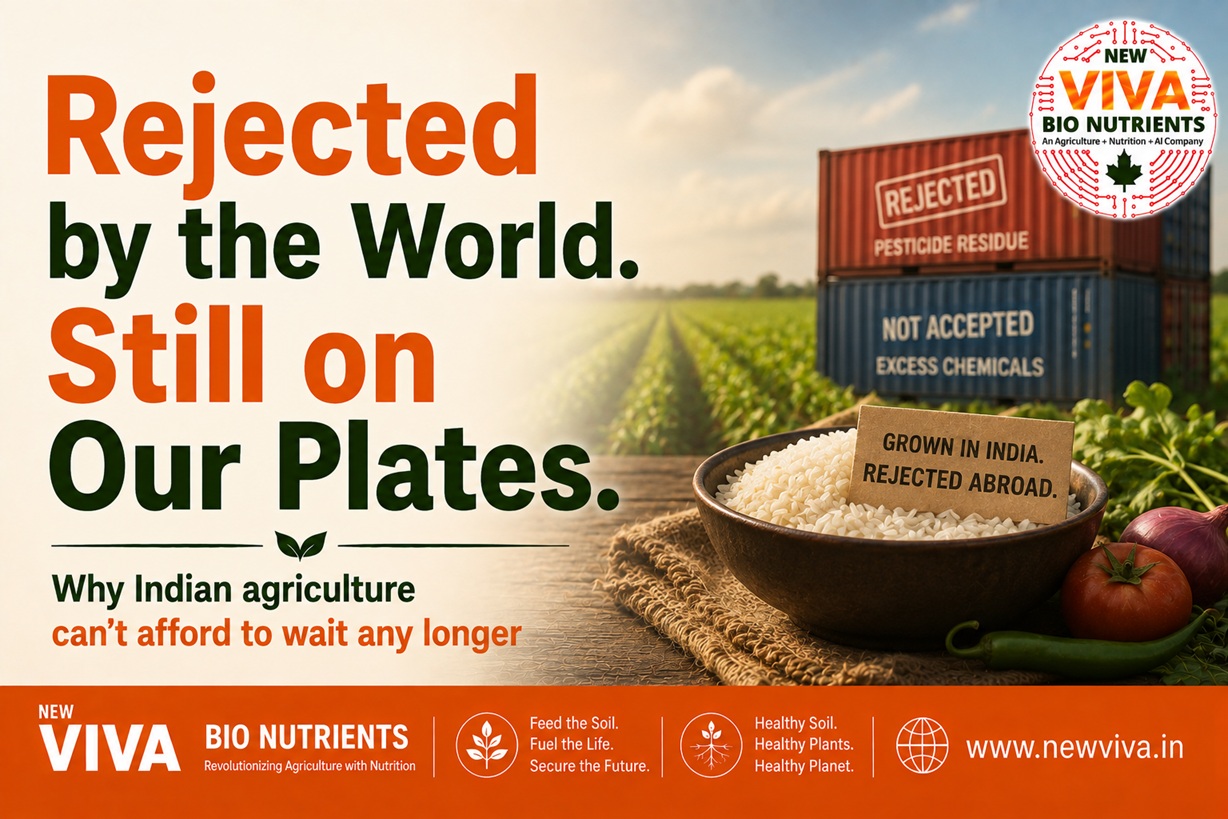
Indian rice, groundnuts, and cumin shipments have been rejected at European ports under the EU's RASFF alert system due to pesticide residues, aflatoxin contamination, and grain quality deterioration — all linked to chemical-intensive farming practices. Regenerative agriculture, which restores soil biology and reduces synthetic input dependency, is the most scalable solution to meet zero-residue export standards without sacrificing yield.
Federation of Indian Export Organisations (FIEO)
The official warning image released by the Federation of Indian Export Organisations (FIEO), citing the European Union's RASFF (Rapid Alert System for Food and Feed) report, is before our eyes.
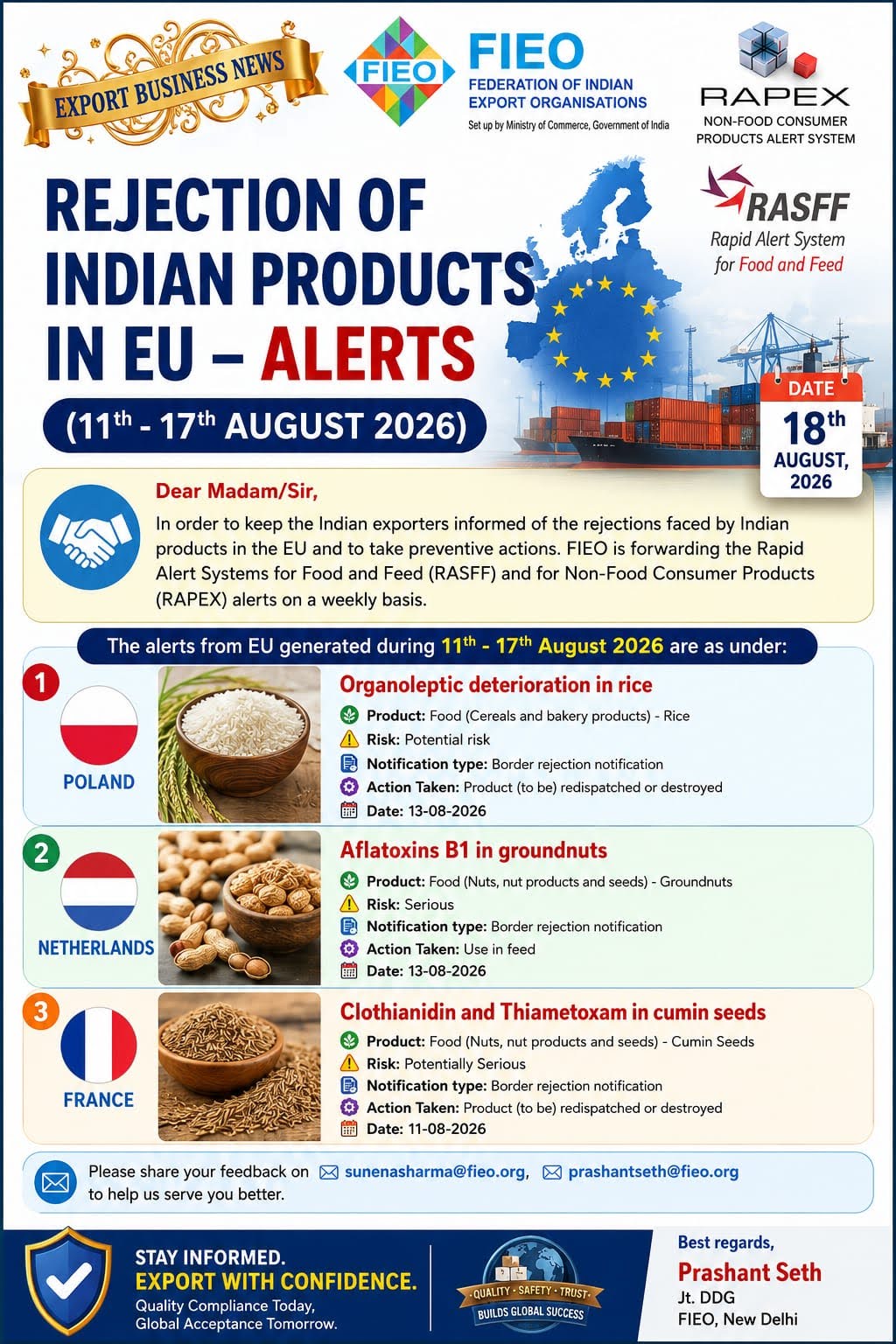
At European country ports, Indian agricultural export products are being sequentially detained, destroyed, or sent back:
- Poland has rejected Indian rice: Reason: Organoleptic deterioration (flavour, quality and grain shelf-life spoilage).
- The Netherlands has rejected Indian groundnuts: Reason: Aflatoxin B1 (deadly fungal toxin).
- France has rejected Indian cumin: Reason: Clothianidin and Thiamethoxam (banned potent chemical pesticide toxins).
This is not some minor trade issue; it is an alarm bell indicating that India's overall agricultural export market has crashed into a massive biological dead-end!
1. Why has chemical agriculture lost in the export market?
Modern chemical agriculture is a dangerous cycle of continuously dumping fertilizers and pesticide poisons.
- Systemic toxin penetration (cumin rejection): Neonicotinoid pesticides like Clothianidin and Thiamethoxam are systemic poisons that penetrate and reside within the crop's nervous system. They cannot be washed away with water. When tested in foreign labs, this poison is blatantly caught and causes exports to be cancelled.
- Crop immunity degradation (groundnut rejection): As we saw in post VV-030, when chemical salt fertilizers are dumped into the soil, plant root exudation stops and micronutrient availability shuts down. Because nitrates that have not been converted into proteins remain in the plants, toxic fungi like Aspergillus attack the groundnuts and seed within the grain the poison Aflatoxin, which causes cancer in the human body.
- Reduced shelf-life (rice rejection): As we saw in the paddy phenology post VV-027, in paddy grains produced with excess chemical nitrogen, cell wall strength (Silicon) and complete proteins are lacking. En route on the ship itself, the rice becomes odorous due to moisture, changes colour, and deteriorates in quality.
2. Why cannot conventional organic agriculture fill this gap?
Whenever exports are cancelled, superficial advice is given: "Everyone immediately switch to traditional organic agriculture."
While the intention is good, traditional organic agriculture cannot operate quickly and commercially enough to meet the enormous demand of the global market:
- Yield decline: Without proper scientific guidance, when chemicals are stopped and only cow dung is applied, yields crash by 30% to 50% in the first few years. Ordinary farmers cannot bear this loss.
- Lack of soil biological vision: As we saw in posts VV-035 and VV-029, organic certification only says "do not apply poison" but does not guide building the fungal-bacterial balance in the soil. Due to continuous tillage and relying only on bacterial liquid manures, mineral deficiencies and disease attacks continue there as well.
3. Regenerative Agriculture: The only commercially viable solution!
The only science that can deliver full commercial yields while simultaneously producing export-quality produce free from chemical toxins is Regenerative Agriculture!
This becomes possible when we use the regenerative science strategies detailed in this blog series:
- Seed microbiome consortium refinement (VV-031): By avoiding chemical poison seed treatments and using biological seed treatment to accelerate the Rhizophagy cycle from day one, the crop gains armour-like immunity from the very beginning.
- Biodiverse plants and Quorum Sensing (VV-025): By growing biodiverse cover crops between main crops, a beneficial microbial army gathers in the soil and naturally destroys the Aflatoxin fungi that attack groundnuts.
- Rhizosphere (WA-010): By keeping living roots in the soil throughout the year, mycorrhizal fungi thrive and infuse minerals like silicon and zinc into the grain. This provides rice and grains with long shelf-life and quality that does not spoil.
The global export market has given India a clear warning: "Only food with dense nutrition and zero toxins is the future!"
Neither with twentieth-century chemical poisons, nor with unplanned superficial methods, can we face this challenge. Regenerative agriculture, based solely on biological nutrient science, is the only path that will make India hold its head high on the world stage!
For our complete health, for climate change, and for our rich growth - Regenerative Agriculture alone is the answer. This is the only future for our agriculture.
We'll talk more.
Ravishankar Karuppiah
New ViVa Bio Nutrients
www.newviva.in
934 204 9144